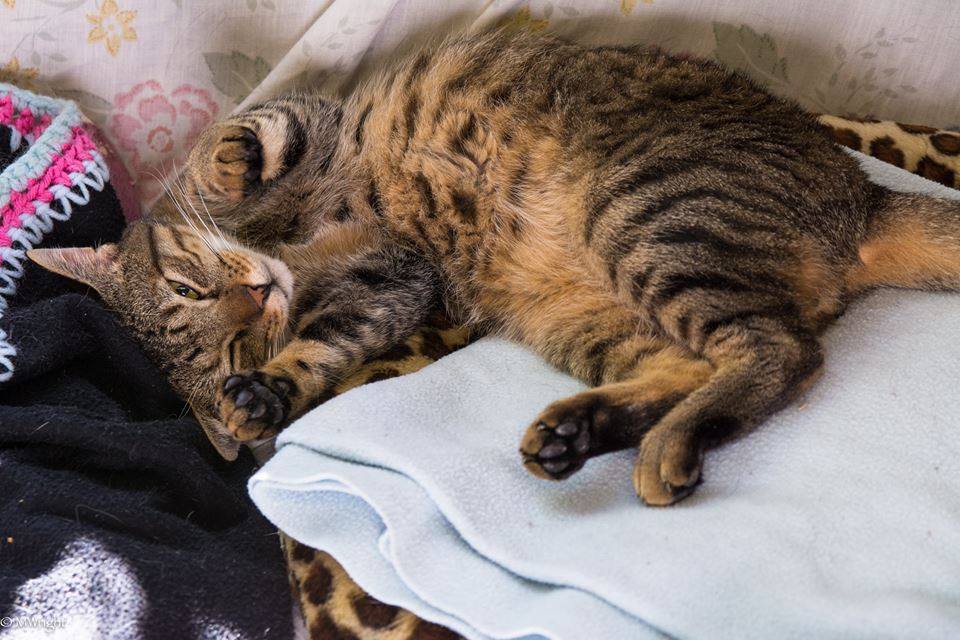
RAPS is short for Regional Animal Protection Society, a registered charity and operator of a sanctuary which houses and cares for nearly 500 homeless or abandoned cats in Richmond, BC, Canada. The Neko Files is a celebration of the sanctuary and all those who live and work there.
Showing posts with label Pebble*. Show all posts

Thursday, November 19, 2020

Meowvember furry faces

November is the month when guys who can, grow their facial hair, and then shave it off at the end of the month to raise funds supporting men’s health issues. In the feline world, facial hair is not limited to the males.  Obviously some cats are furrier than others, but it’s not just the quantity of face-fluff that’s noticeable, but also the markings.

Magpie - KN

Last time I wrote about Meowvember, we admired the defined ‘tache of Magpie, who usually hangs out around pen 8 and Waldi’s Hut. Magpie is no less hissy, but some of us have now been introduced to Sweet Pea, in the front courtyard, with similar markings. Sweet Pea has been with us a while, but is very feral and wary, and prefers not to be seen (unless you carry chicken!)

Sweet Pea - KN

Digby, Smoochie, Mya, Salish, Comet and Rocky all featured in the Meowvember blog back in 2017, but since then we’ve an assortment of new facial markings to join the ‘tache club.  One of my favourites is sweet Winston, who lives in Waldi’s Hut – he’s still a little shy, but loves being petted when he knows he can be safe with you

Winston - KN

Spirit and Tootsie are both one-sided ‘tache wearers – Spirit (front courtyard) on the right and Tootsie (back courtyard) on the left. 

Spirit (right) and Tootsie (left) - KN

It’s easy to tell them apart because of where they live; distinguishing facial markings are more important with sisters Sandy and Pebble in Pen 4. Pebble quite likes human company and presents herself for petting; her twin sister Sandy is more likely to greet you with a claws-out swat in true feral fashion. Pebble’s marking is on the left of her nose, and Sandy’s on the right.


Many of the tabbies in Pen 8 have facial markings that help us distinguish them. Johnny is the alpha, hissy boy, with a single smudge to one side of his muzzle; his sister Hailey carries little balanced patches on both sides. 
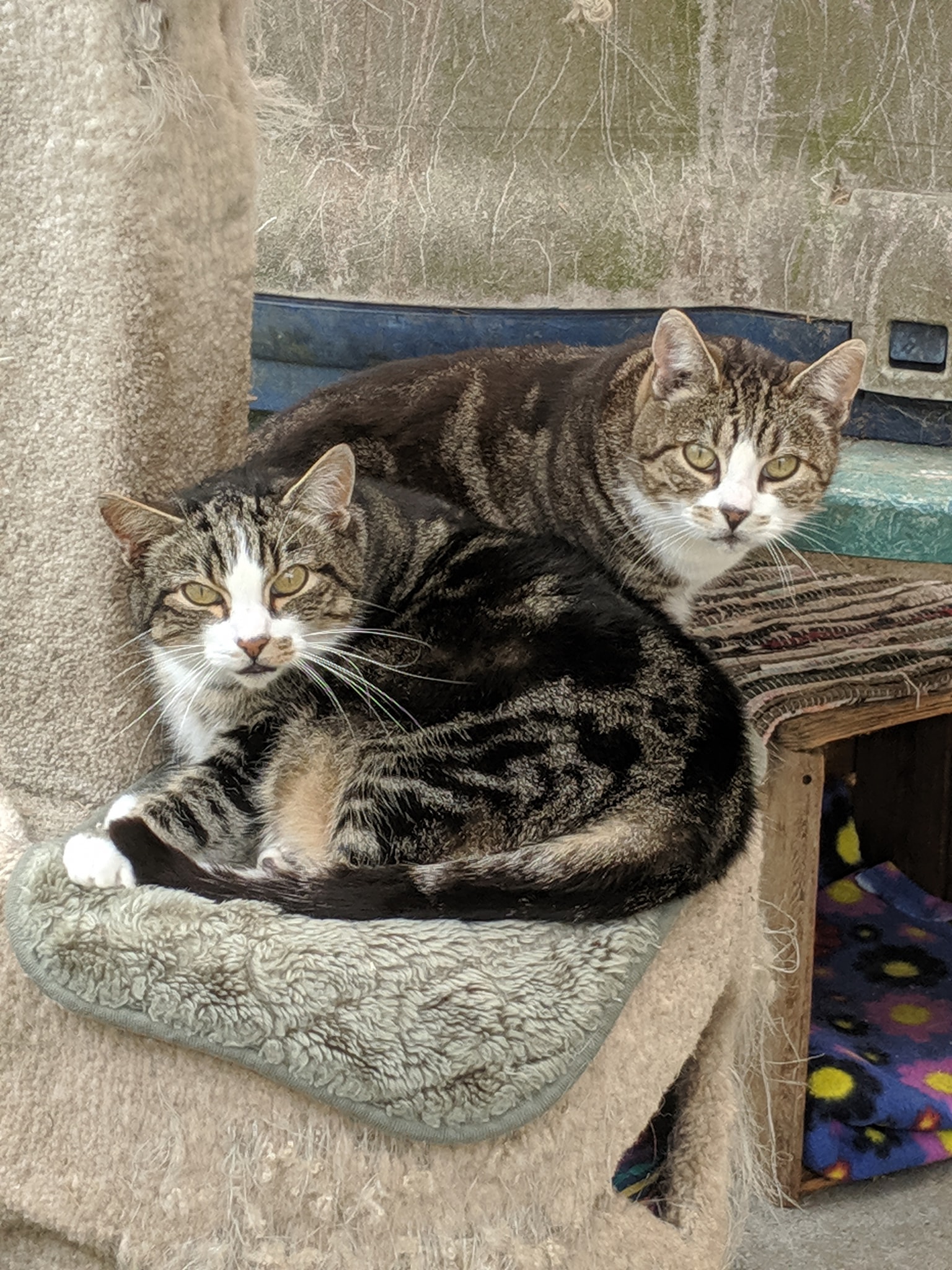
Johnny & Hailey  -  LBF

Fellow feral Selena is the only one in the pen who now approaches to ask for petting; her markings cover both her muzzle and her chin - ‘tache and beard.

Selena   -   MD

My favourite boy Skittles not only has a hint of ‘tache markings, but he also has a serious quantity of facial fur.  But it’s all his – he is not going to be shaving it off at the end of the month!
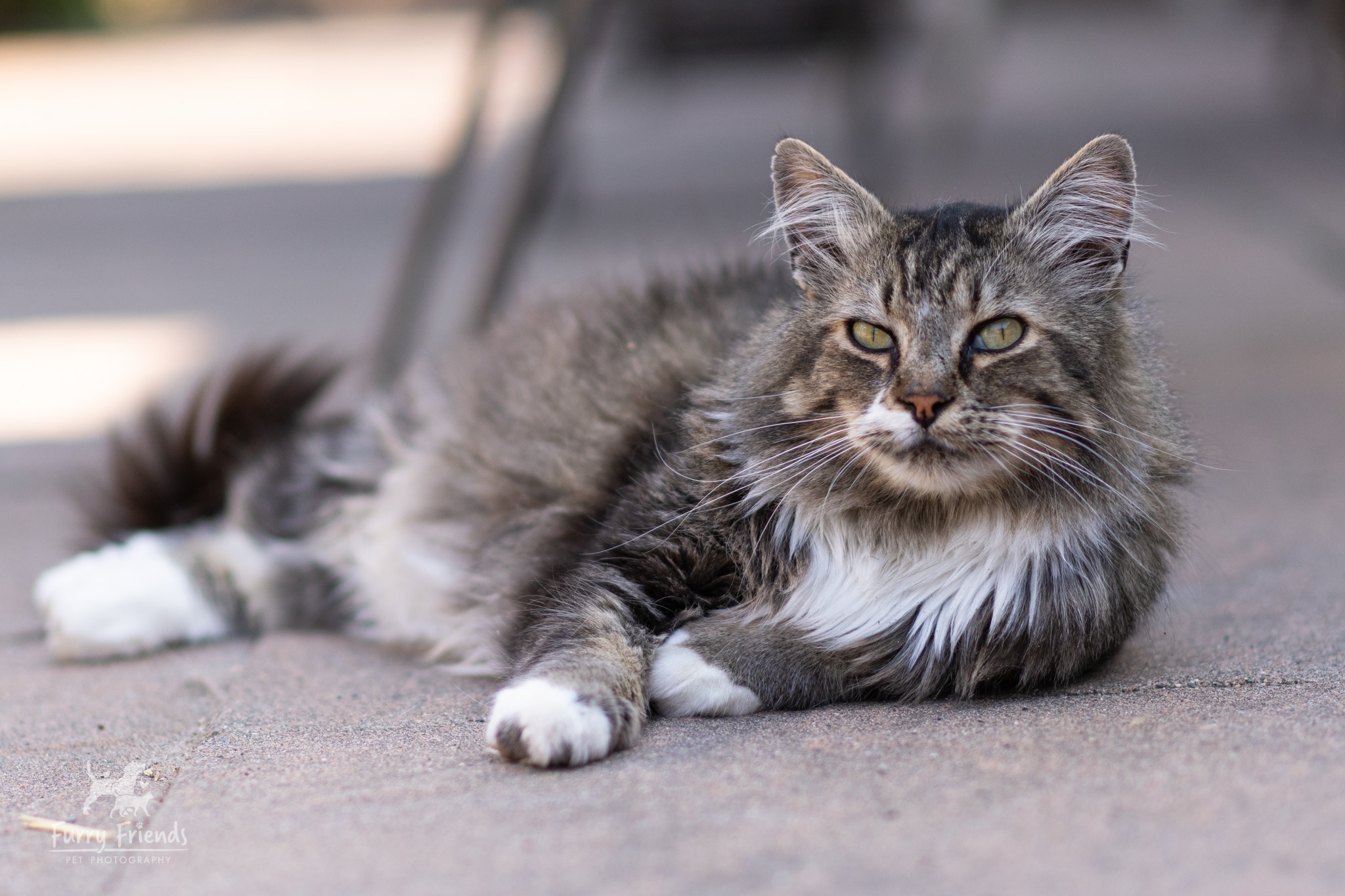
Skittles  -  MW

Our magnificent Dell has relocated to the Single-Wide (for insulin injections), and will also not be doing any shaving at month-end.  Dell has wonderful fur, and usually an impressive set of whiskers – we noticed that some of his whiskers were much shorter than they should be, and guessed that his little tabby girlfriends in Pen 3 had probably been doing some over-enthusiastic grooming. Now that he’s made himself at home in the SW, we hope he can regrow his nibbled whiskers.

Dell - with nibbled whiskers - KN


Blog by Brigid Coult
Photos by Lisa Brill-Friesen, Melanie Draper, Karen Nicholson, Michele Wright

Thursday, June 25, 2020

Ranger

Another traveller from the North-West, Ranger, like orange sibs Titan and Dixie, came to us through the good offices of Masset Animal Helpline
Ranger - KN
The Masset rescue folks know all the local cats - which is why they were so surprised when Ranger appeared one day, in a trap set for another cat. They guess that he was dumped or escaped from a boat that was docked there. He has the sort of muscular build and big jowls of an un-neutered tomcat, and that was the Masset rescue's first job, to get him "fixed". It was clear that he distrusted humans and he was not adoptable, and so he was flown down to us.  Deeply suspicious of us and of this place in which he’d arrived, Ranger crouched in his cage behind a drape and let us know that he did not want to be disturbed.  Gentle approaches from the staff and Kitty Comforters were scorned, and  the decision was finally made that he would join the feral cats in Pen 4.
Don't disturb me! - KN
Most of the cats in Pen 4 take one look at an arriving human, and scatter for cover. Only OJ (always hoping for treats) and Pebble (sister of feral Sandy) will normally allow contact, and both are increasingly willing to approach and interact with a visitor. The others hide in the shrubbery or at the back of the pen.
Only leaves here...   KN
When Ranger joined the group he was equally wary at first, but the dominant tom-cat inside quickly established that this was his territory, and we began to encounter him more often at the gate, letting us know that we were stepping on his turf. He wasn’t actively aggressive, but he was obviously watching us very carefully.
Advancing with suspicion - LBF
In these days of pandemic shut-down, the Kitty Comforter program has been on hiatus, but Ranger became a project for several of the staff and volunteers. Suspicious glaring gave way to curiosity, and closer and closer approaches. Tidbits were gradually accepted directly from the hand, and then he discovered the joys of petting, and of a good ear-rub.
LBF

Grass-stalks became the summer go-to toy for many of the cats, and Ranger was no exception. Despite his stocky body, he plays with the best of them, and he plays hard.  He's becoming more sociable with the other cats, and he and Pebble can often be found hanging out together
Pebble, Ranger (& OJ in the background) - KN
Many of our feral cats end up with us because they’re simply not tameable, and we don’t force them to accept contact with us – that’s why we have pens 3 & 4.  But it’s so satisfying when a cat like Ranger - feral or mistreated - decides that they can trust us. Obviously his earlier experiences with humans were not happy ones, but with us he's discovered that we let him go at his own pace and decide when he want to make contact.
Play with me, please... - KN
It’s starting to look like his confidence is rubbing off on some of the others, because cats who formerly avoided us, like Amelia Earheart, are beginning to join in the grass-stalk play. But
Ranger leads the way – ankle-rubs and petting that would not have been possible six months ago are now the norm – perhaps he’ll decide to try being a lap-cat next!

Blog by Brigid Coult
Pics by Lisa Brill-Friesen & Karen Nicholson


Thursday, February 13, 2020

Furry Families

As we approach the Family Day weekend, I thought I’d take a look at some of the feline families that constitute the Sanctuary inhabitants.
Sandy and Pebble can never be mistaken for anything other than sisters! - KN
Because so many come in as ferals, we can’t always be sure about which cats are related – but family is family – through blood or through bonds of affection.
Mozart & Pistachio - KN
Some of last week’s blog cats are obviously family by blood – Mozart, Pistachio and Caleb have clear family resemblance. Their “teen” buddies, Leo and Benny are bonded, but not genetically related to each other or to the first three; however all are obviously “family” to each other.
In  Pen 6: Aphrodite, Athena, Vesta, Nyx - LBF
This past summer, we had a major trapping operation when a feral colony was suddenly discovered, with kittens and pregnant moms everywhere. All the kittens have been adopted, but we’re working on getting the young adults comfortable with us.  Pen 6 is now home to a colony of shy teens, and the Kitty Comforters are making slow but steady progress in coaxing them to accept attention.
Pax - MW
Zeus - now a cuddle-bug - MD
Two big black fuzzies are probably the baby-daddies to a number of the adopted kittens. Zeus and Pax now live in the Val Jones area with the other friendly FIV+ cats. Both have settled well, and may well have been strays rather than feral; however, an un-neutered cat is anxious to roam and find a female, and fighting males can easily pass FIV to each other in bites. 

Ariel - KN

Barbara - KN
One small family has joined us from Kamloops. Outside the city boundaries, another feral colony grew out of control. Private rescuers have been going in and trapping, and shelters in many places have been stepping up and taking in the less adoptable cats. We accepted Baxter, Bruley, Barbara and Ariel – knowing that the first three had a respiratory virus and would need careful tending. They have done well, and are now part of the Double-Wide population, and reunited with Ariel. Barbara is particularly loved by many volunteers; she has something of the chromosomal disorder that marked our beloved Daisy.
Honeydew, Melon, Kiwi - KN/LL
brother Shiver - MW
The three calico cats in the Connor House are obviously sisters; Melon, Honeydew and Kiwi all seem to enjoy each others’ company.  We don’t know whether their “brother” Shiver is related by blood – his appearance is nothing like the others. But more than one male cat can mate with a female, and it’s possible that in one litter you can have kittens that look radically different from each other, because half their genes are from another source.
Samantha loves to snuggle with Eclipse - KN
Without genetic linkage, there are cats that move together to make clear “families” - sometimes of semi-bonded pairs, sometimes just of individuals that like each other. Samantha likes to have “her boys” around – she is most often found snuggling with Chimo (who still misses his beloved PawPaw), but loves to be with Eclipse, and now Winston is often in the vicinity.
A sisterly grooming session with Sage & Silky

Little Barbara (above) has made herself at home on the DoubleWide deck with the feral boys - Luke, Bodhi and Hamlet are unrelated but bonded, and now they have a little adopted sister.
Barb and her boys - JK
Cats often have a reputation as loners, but at the Sanctuary we also see how important family can be to them.

Blog by Brigid Coult
Photos by Lisa Brill-Friesen, Melanie Draper,
Jennine Kariya, Leslie Landa, Karen Nicholson, Michele Wright

Thursday, August 15, 2019

Formerly Feral

Many of the cats at the Sanctuary have come into our care as ferals.
Pen 8: Selena, Hailey & Johnny - KN
Some of them will remain feral in behaviour all their lives.  Many of the cats in Pen 8 are examples of this – as you enter the pen, they take a horror-filled look at the intruder, and make a beeline for the closest cover. It is clear in their eyes that they want nothing to do with humans, and when, in areas like pen 4 that cover may be in a free-standing kennel or in the bushes, they present a significant challenge for the med staff who need to check on them.
Pebble (front) and Sandy (rear) - DW
In this pen, only OJ and Pebble are comfortable being touched (the links take you back to their early days, but a little searching by name will yield updates); both enjoy petting, but you can see the wariness in their body language. Pebble’s sister Sandy is almost identical but sends out a very clear “don’t touch me!” vibe.
Yma prefers to climb out of reach - MW
These cats, together with many though not all) of the ones in Pen 3, and a good number of those from other open pens, were born wild, missed being socialised at the optimal time, and have it well ingrained that humans are The Enemy – we may be a source of tasty food, and of occasional touch, but we are not really to be trusted. We occasionally worry when an old feral suddenly becomes friendly and handleable; it’s often a sign of a kitty dementia, as the cat forgets that it should be scared, and it may be an indicator that it’s coming to the end of its life.
Little Calista only became touchable in her last months - MW
Common cat-handling wisdom has it that a kitten should be socialized by the age of 3-4 months, or it won’t socialize at all. In fact, those of us who have had semi-ferals in our homes know that they can become very handleable to their own people, though they may always be wary of strangers in their space. At the Sanctuary we have tried to keep some of the younger ferals together around the back deck of the Double-Wide, and the Kitty Comforters have worked with them as much as possible.
Bubbles loves to play - BC
Gradually we see behaviours changing:  hissy Luke is now allowing us to touch him; Bubbles is enjoying interactive play;  shy Ruff is coming out of his hiding place; beautiful Scooter, who hovered just out of reach on the cage-tops, smacking at us when we coaxed her closer, is now coming down to an accessible shelf and enjoying being petted.
Scooter original (L) and relaxed & happy (R)
In pen 3 former feral Napoleon has decided that humans are worth cultivating – both regular volunteers and Kitty Comforters have charmed him to the point where he will approach, asking for petting. His buddies at the back of the pen are not ready for much contact yet, but Napoleon is happy with human company.
Napoleon - LB-F
My own former-feral triumph has been with Skittles, formerly of Pen 6. That pen has now been vacated in preparation for another group of ferals coming in, and Skittles and his friends have the run of the back pens. Most of them are now based in Pen 2, where there are other semi-ferals, and lots of places to hide. But Skittles, who was always the bravest and most social of them, has decided that he likes to be around people. Chicken tidbits help – he’s always been a chick-oholic.  But he recently decided that since I was a source of Good Things, he might try something new, and he hauled himself up on my lap.
Loving a lap - DW
This was not just cupboard love – he wanted petting and attention, not just feeding. It’s a little painful on the legs – he’s a big solid boy and doesn’t jump much, so lap-climbing is mountaineering!  But it’s happened often enough now that we can really feel Skittles has earned the former-feral label. And he is now transferring that trust to other people.
Skittles - MW
All these cats may some day become very used to human touch, but they will always remain cats that we will hesitate to adopt out because of their background, and because new experiences will likely cause them to revert to the fear-filled wild creatures that originally came into our care.

Blog by Brigid Coult
Photos by Lisa Brill-Friesen, Brigid Coult, Karen Nicholson, Debbie Wolanski, Michele Wright

Monday, July 15, 2019

Adopting a Feral

More than half of our Sanctuary cats have come in as ferals.
Smithy's first reaction always used to be a hiss;
 recently he's become more curious than aggressive - BC
Feral cats are those born wild, or living wild from a very early age. They run the range from the cats that take one look at you and turn to hide (or to hiss angrily at a human interloper) to the cats who have decided that there is no better life than sitting in a human’s lap. Ferals and strays are not the same thing; a stray knows what human contact is, and though scared, may more easily revert to tame behaviour.
Our beloved Dell came in as a terrifyingly aggressive cat;
we are sure he was a stray because of how quickly he settled with us.  - MD
For many years the Sanctuary has been a refuge for ferals, as well as for owner-surrenders and health-problem cats. When we’ve had a particularly friendly cat, we have sometimes transferred it to the Shelter at 5 Road, so that it can have its chance at finding a new home.  And because for many of those years, the Sanctuary was Richmond’s best-kept secret, that was very often the only way those cats might make a new start, if they weren’t adopted by one of our volunteers.
Sandy (L) and Pebble (R) are feral sisters;  Sandy still has the horrified
feral stare and is wary of humans; Pebble loves to be petted.  - KN
What we call the semi-ferals are those cats who have adapted well to life with humans at the Sanctuary; they are often among the welcoming committee at the gate, and come looking for petting and attention. But just because they seek attention doesn’t always mean that they are adoptable – experiences with cats like Esme and Jenny led to a general no-feral-adoptions rule. A cat that appears happy to be handled at the Sanctuary may freak out when taken out of its familiar turf and put into a new home.
Sweet Jenny is entirely at home in the Single-Wide - MW
Many of us, of course, have ferals or former ferals at home. My own little Kissa, who passed last year, would hide when anyone except me or her favourite cat-sitter entered the house.  It took her more than two years of living with me before she allowed herself to lap-sit.  I have friends who care for neighbourhood ferals, who have adopted them as their humans, and who come and go from their home with great comfort.
Watson was very scared when he came in to our care;
he now lives happily with one of our volunteers.  MW
But at RAPS we feel a strong responsibility to the cats who we allow to leave in someone’s care. A cat that escapes from a new home may never return if it’s on unfamiliar territory. When you adopt a cat from the RAPS City Shelter, you will complete a questionnaire intended to ensure that you will provide a safe home for your new friend. If you adopt from the Sanctuary, you can expect, in addition, to be grilled by our Manager and/or med staff. Will this be an only cat? What is the potential access to outdoors? Do you have a room that can be a sanctuary for its first days or weeks? What’s your experience with ferals?
Peony - now called Twinkles - was a half-grown feral kitten from a composting
centre when she came to us; she's another cat who has found a home with a volunteer.  MW
Some of our former ferals we will never adopt out – cats like Simone and Latte have lived with us for years, and we would not want to have a relocation make them unhappy. For them, the compromise is sponsorship – the knowledge that you are contributing to their welfare and to a continued happy life with us. But others have become contented outgoing members of the welcoming committee, and when the right person comes along an adoption may be possible. The impetus has to come from the cat; when a visitor appears weekly and the cat makes a bee-line for them every time, discussions can take place. Sadly, many of those bonds happen with people whose situation may not allow for an adoption, and they become among our most faithful visitors in order to have time with “their” cat.
Pretty Cher is mostly a one-man cat,
and her guy comes to visit with her every Sunday - MW
The majority of adoptions from the Sanctuary are actually owner-surrender cats who may have been too stressed at the Shelter to show well, but who blossom in our hands.  Tiger, Terra, Suki (now Cassie - first blogged here by her new owner), Mookie and several others are doing very well in new homes – but the Sanctuary was never really home for them. Cats like Cricket or Silky in the front courtyard, and Willow or Hillie in the back are all a very different affair – they are all cats who have known the wild life as youngsters, and they are all used to a life without boundaries (other than the Sanctuary walls). We would need to be very sure that they had bonded with a human they had chosen, and that the potential owner understood that giving a home to a feral may be a much longer process than with a tame cat. Cricket, in particular, is outgoing and sociable with visitors (as both Jenny and Esme were), but that is no guarantee that she would be a good candidate for adoption.
Cricket loves attention - but she loves her relative freedom still more - MW
We do have feral adoption success stories – especially from among our volunteers, who establish a relationship of trust with one cat or another. But even with a feral-savvy adopter, it can take much patience, waiting for the cat to decide that it can trust again after relocation - Watson's human tells me that it took more than three months for him to come out of hiding.
Many of our ferals, friendly and shy alike, will need to live out their lives in our care, confident that with us they are in a place of safety.


Blog by Brigid Coult
Photos by Brigid Coult, Melanie Draper, Karen Nicholson, Michele Wright

Sunday, April 12, 2015

Adoptable? or not? - Part 4: the semi-ferals

In an earlier “Adoptable? – or not?” blog, we were reminded that most of the cats at the Sanctuary are here for life – because it is just that: a sanctuary. We all know that there are too many cats out there, and that there are municipalities in which they would get brought in and “euthanized” immediately if not deemed adoptable. Because of the vision and determination of Carol Reichert and the Board of RAPS, a no-kill shelter and sanctuary are a blessing for the city of Richmond, and for the animals they serve. Feral cats, cats with feline AIDS or leukemia, cats with behaviour problems – all get to live out their lives in well-tended and well-loved peace.

The fourth category, that of “semi-feral” is a hard one to define, though. Experts tell us that there is a window in the life of a kitten during which it is usually possible to socialize them and get them used to human handling, and if you don’t hit that window correctly, the kitten won’t tame. For that reason, during “kitten season”, the litters that come in, go to volunteers for home fostering and intensive hands-on care.

Foster-mom Kati's V-litter - all now safely adopted out
Even within a group there will sometimes be one who never really tames, and who, rather than going to Number 5 Road for possible adoption, will end up coming directly to the Sanctuary to join the other ferals.
Sandy & Pebble - MW
Sandy and Pebble came to us at the age of about 6 months. Staff and volunteers spent considerable time with them, but to no avail – they continued their feral behaviour and are much happier out in the back pens.


My own little girl, Kissa, is technically a feral – she came to me (privately, not through a shelter) as a very young mum with four kittens; the kittens all got adopted out, and I was left with this skittish teenager on my hands. She has to be nearly 15 now, and with me she’s very affectionate; but when anyone else comes in the house she goes into hiding. It takes a special person with a lot of patience to get to know her.
Kissa - BC
That patience applies to many of the Sanctuary semi-ferals.
Gilbert - MW
Gilbert is a prime example of that – from being a terrified feral hiding on a shelf, he now allows himself to be a lap-cat (with a little help from tasty treats!). But our experience with Esme and Jenny has taught us that a semi-feral reverts very quickly when in unfamiliar territory. If there is a strong bond with the adopter (most frequently a volunteer who interacts with the cat on a regular basis), the hurdle may be overcome, but for the most part we’re reluctant to remove a scared cat from an area it knows, and from a community of cats with which it is familiar.
 
Lana & Salty - MW
And in some cases, the cat in question is a valuable member of the community. When we lost our dearly beloved Mario to cancer, it was not just the volunteers and staff who grieved, but also Mario’s “harem” of boyfriends and girlfriends. It was Salty that stepped into the breach and took on something of Mario’s mantle as the comforter and the cuddler; brought in as a feral kitten, Salty belongs on the double-wide couch with his snugglers.
The couch cuddlers - with Salty at centre
There are many other cats like this. They accept human attention (especially where food is concerned), they seem to be tame – but when under stress, they revert to the wild things they were when they arrived. The stories about Jenny and Esme are warnings for us all, that being comfortable in their environment is vital for these cats, and an adoption can be more traumatic that we know – and even tragic, if a former-feral takes the opportunity to escape.
However, let’s differentiate between former ferals and strays – with the latter there is hope. 
(See the last in the Adoptable? or not? series - upcoming....)

Blogger: Brigid Coult
Photos: Brigid Coult, Kati Degraaf, Michele Wright