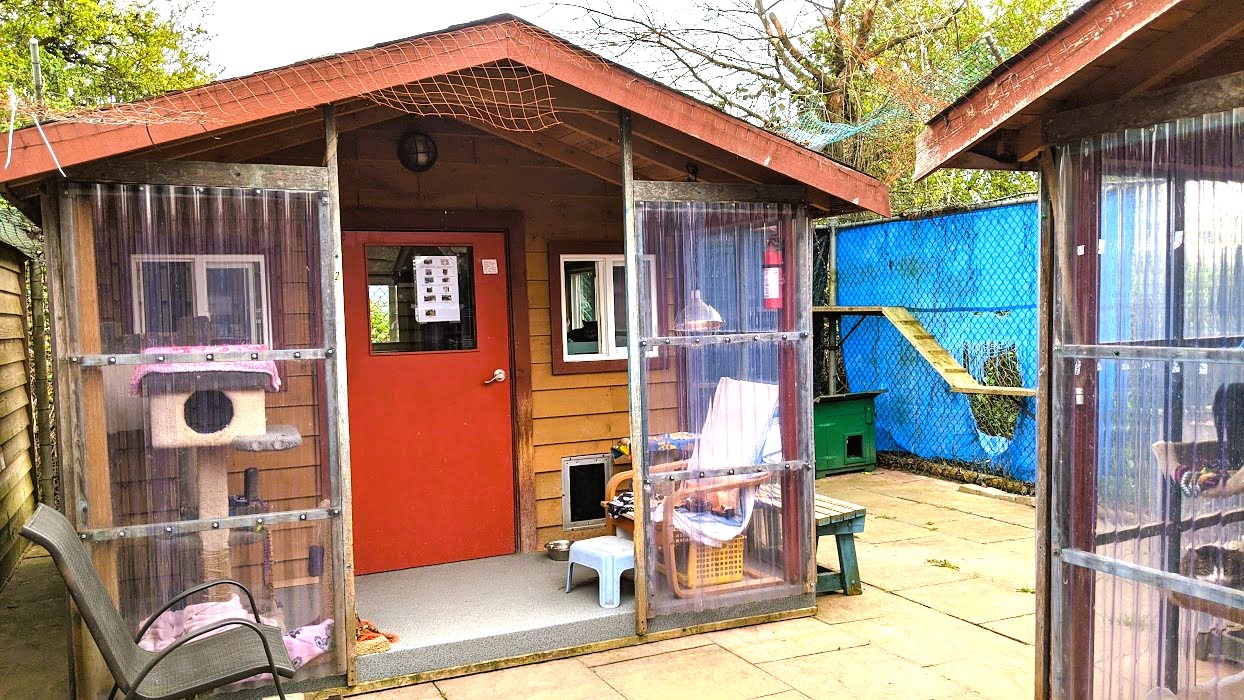
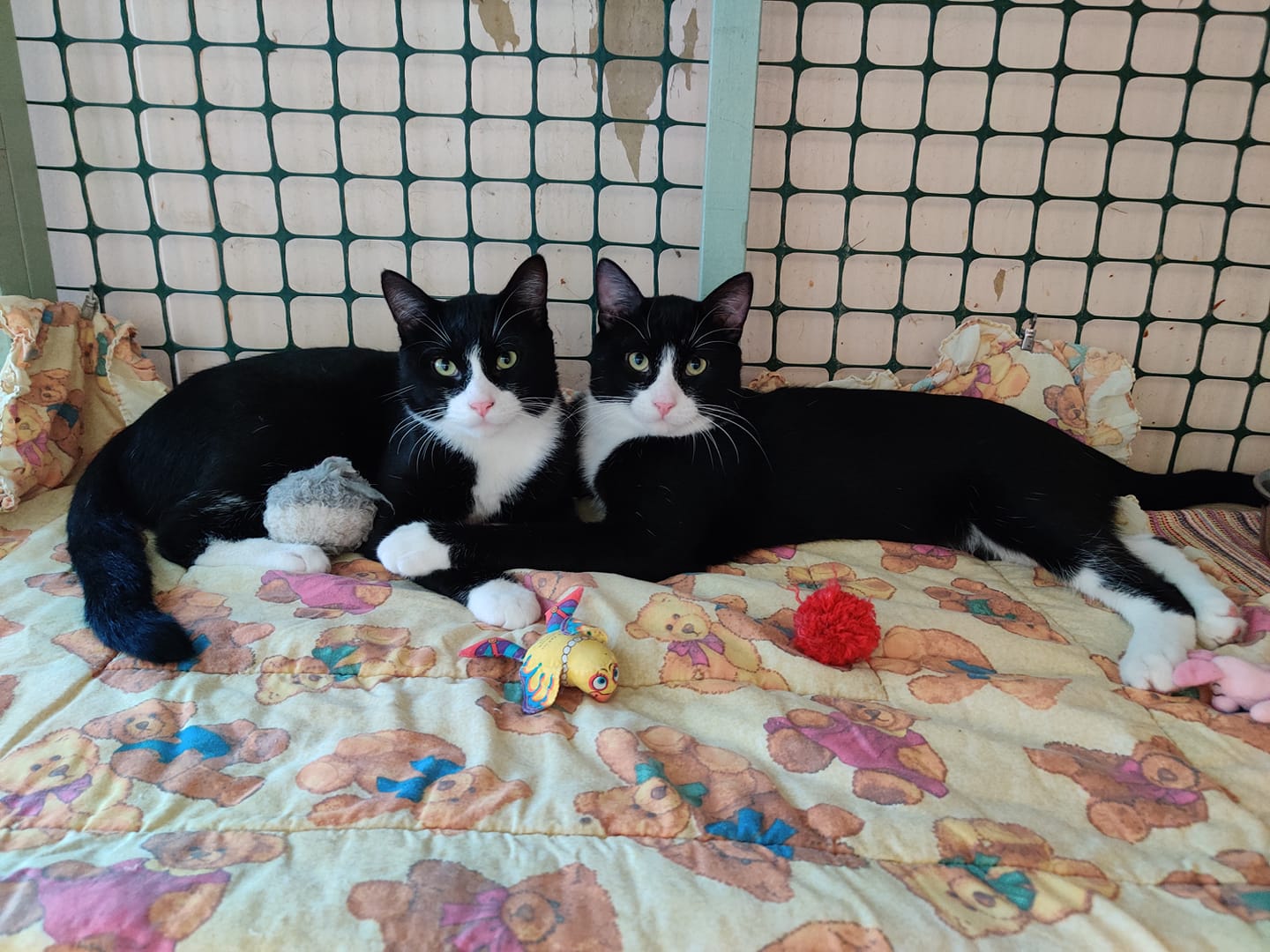
RAPS is short for Regional Animal Protection Society, a registered charity and operator of a sanctuary which houses and cares for nearly 500 homeless or abandoned cats in Richmond, BC, Canada. The Neko Files is a celebration of the sanctuary and all those who live and work there.

Wednesday, May 31, 2023

It's a Cat's Life

Simon   (HM)

In the middle of a somewhat stressful week for me, personally, I am grateful for the presence of cats in my life - particularly my own boy - and for the reminder of their calm ability to take themselves off for a snooze at any opportunity.

My own Scout - former RAPS cat   (BC)

There is no better easer for blood-pressure than a quiet snuggle with a purring friend

former feral SweetPea loves to be cuddled  (LBF)

And with the warmer days, cats who have stayed indoors are increasingly venturing out in search of the sunshine.

Heatseekers -
Guthrie, Emilio, Damara, Bodhi, Mitzi, Hickory (KN)

Some of them like to sleep solo...

Rollins   (KN)
others would rather doze in tandem....

Baby & William  (LBF)

or with a crowd.

Pen 6 group-snooze  (LBF)

Some prefer to curl up in a container...

Ariel  (KN)

others will sprawl out to gather or dissipate all the heat.

Jasper shows all   (KN)


Carly Simon  (DW)

Some achieve darkness with a face-plant

Christina Aguilera  (GA)
others prefer to feel the warmth on their faces

Sweet old sun-worshipper Tara  (BC)

Every day is a holiday for our Sanctuary cats - a day to do lots of nothing, or to sleep, or to play - alone or in company, as they choose.

When we say "it's a dog's life", the implication is one of sadness or difficulty - though as we all know, many dogs have lives that are anything but sad!  It's a pity that there's no such common phrase as "it's a cat's life" - meaning a life of comfort and ease.  We could all do with that sort of life!

(minimal) Blog by Brigid Coult
Photos by Graham Akira, Lisa Brill-Friesen, Brigid Coult,
Henrie Morgan, Karen Nicholson, Debbie Wolanski


Wednesday, May 24, 2023

Hunter

Hunter  (KN)
 For many years, people entering the Sanctuary were greeted by a charming long-haired tabby boy, who would bustle over to inspect, claim a lap if one was offered, and gobble any treats.  We lost our Jake about five years ago, but I still have a sense of deja vu when I am met at the gate by Hunter.

Jake - loved and missed  (MW)
Hunter came to us last spring, having been surrendered to RAPS Adoption Centre in March by his owner, due to his extreme aggression towards her. She’d had Hunter since he was a kitten and he was always quite mouthy, however it escalated to the point where he would attack her multiple times throughout the day. Time in the Adoption Centre didn’t work for him;  many cats are stressed by being caged and by close proximity to other cats, and Hunter was transferred to Sanctuary in the summer. 

At least, the Sanctuary cage is roomy - 
but I still don't like it!    (BC)
Once released into the front courtyard, he settled pretty easily. Cats who don’t fare well at the Adoption Centre often do much better with a sense of freedom, and with the ability to find space apart from other cats. Hunter is not shy about interaction with cats; with humans he’s a little more erratic.

Sweet, when he chooses...   (BC)
He’s still quite young and has aspects of less-desirable “teen” behaviour, but our staff think that in fact he is adoptable and trainable – insofar as one is ever able to “train” a cat. We have seen that former (and now part-time) brat Jasper is ready to be challenged by learning little tricks, and keeping his brain busy makes him less brattish. We’ll have to see if that will work with Hunter. 

Some bribes are appreciated (LBF)
Unfortunately, whenever the staff find a potential adopter for him, Hunter decides that he wants nothing to do with people, and goes off to hide somewhere.  He likes who he likes, on his own terms, he’s not interested in an “arranged marriage” and his person will need to be pretty cat-savvy!

Picasso & Hunter  (GA)
Hunter gets on best with his buddy Picasso, and the two of them can often be found in the lobby outside the SingleWide, or chasing and tumbling with each other in the courtyard. He will occasionally play with a wand toy, but seems to like solo play and cat play more than interaction with humans, though he has his favourites. Assistant Manager Valerie can hold and cuddle him like a baby, but he won’t allow that privilege to everyone. 

Cuddles with his favourite person   (VW)
He’s not interested in my bribes, and gives me that slitty-eyed disdainful look that cats can do so effectively, before he turns his back on me and shoots up his leg to wash.  He’s on the “potentially adoptable” list, and can be found sporting a very dashing bandana at weekends when visitors are around – though he’s more likely to tuck himself and his bandana away until the visitors are gone, and dinner is served by the evening volunteers.
Hunter - dressed to appeal  (KN)

Blog by Brigid Coult
Photos by Graham Akira, Lisa Brill-Friesen, 
Brigid Coult, Karen Nicholson, Valerie Wilson & Michele Wright


Wednesday, May 17, 2023

Lynx-point Lovelies

Curious & SweetPea  (LBF)
 A new clowder of cats came to us from the Kootenays last year, and were introduced to the blog in November.  This spring, the gate to Pen 8 was opened, and many of them emerged quite confidently.  One or two shy ones prefer to remain in known territory, but the others have made themselves at home in the back courtyard, and are frequently found exploring towards the eastern side of the Sanctuary.

Big Daddy (Percival) and SweetPea  (LBF)
The majority of the cats have the characteristic sealpoint colouring of the Himalayan breed, though there are no doubt other strains in their genetics. Blond Percival Snugglebut is also known as Big Daddy, and was likely responsible for some of the kittens who have now been adopted.  The two pregnant mamas who arrived were the two little lynx-point girls – very similar in appearance.  SweetPea is the more confident of the two and her eyes are blue, while Curious’s eyes are more yellow. 

Curious, aka "Furious"  (KN)
What would RAPS do without volunteer fosterer Kati? So many cats and kittens have passed through her loving care, and many would probably not have survived without her expertise. Whether the mama is feral or tame, Kati gives them a safe place for birthing and assists with extra feeding when needed. She has probably shed much blood in the process; feral mamas can get pretty annoyed when babies need to be removed for weighing and checking.  The kittens are always the priority for Kati; she is an important part of the socialization process before they go to the Adoption Centre.
SweetPea (LBF)
SweetPea and her five kittens arrived first, at the beginning of July but all the family were small and dehydrated - SweetPea ended up going back to the RAPS hospital for emergency surgery, while Kati bottle-fed the babies until they were weaned, and could finally go to the Adoption Centre. Curious had her kittens in Kati's care, and similarly, they struggled; only three of the five survived. Neither of our lynx-point girls was very keen about this fostering period, but of the two, SweetPea became the most reconciled to some degree of handling. Curious, Kati says, was “a horror show!”, being a very scared and feral girl.  I assume that more of Kati's blood was shed! When the kittens graduated to the Adoption Centre in September (SweetPea's litter was the "I" litter, and Curious had the "J" litter) the two young mamas were brought to the Sanctuary and obviously derived much comfort from being around their friends again.

(Seriously) Curious, and SweetPea  (LBF)
Fast forward to these late spring days, and both SweetPea and Curious are out and about, exploring, getting to know other cats, and finding that humans are, after all, not so bad as all that.  Curious remains reticent – she’s not aggressive, but she’d rather not be touched just now, thank you very much. SweetPea, on the other hand, is obviously remembering Kati’s care, and allowing other people to get close to her; she allows herself to be petted, to enjoy some lap-time, and with staff member Lisa, some real cuddles.

Sleepytime for SweetPea - LBF
The Kootenay cats are, like the Kamloops ones in Pen 6, a very cat-social bunch. For people who look at cats as being solitary and independent, watching the bonds among these clowders is heartwarming.  Yes, we have a number of cats at the Sanctuary who don’t like other felines – and quite often that dislike is a reason for them being here. But for this little family, it’s unlikely that we would ever split them up, and if that were ever to happen, potential adoptees would need to be adopted with one of the other family members to give them comfort.

Happy snuggles - Percival, Owen, Basil & SweetPea  (LBF)

Happy news!  SweetPea has been adopted!
Blog by Brigid Coult
Photos by Lisa Brill-Friesen and Karen Nicholson

Wednesday, May 10, 2023

Darcy - Dazzle's Demon Daughter!

Darcy the door guard  (KN)
Dazzle is a tubby little tortie, full of tortietude, but increasingly fond of human attention.  When she first came to us, some eight years ago, she needed warning flags – she was a feral who stayed out of reach, and if you were within reach, you probably had scars to show for it.  As she has become more accustomed to her surroundings, she has given up on seeing us as the Enemy, and now comes for petting and attention. She’s not a lap-cat and she’d rather have all four feet safely on the floor – but she’s now a Double-Wide favourite.

Mama Dazzle is much sweeter than she looks!  (KN)
About a year ago another cat came into our care. This was a much larger black girl, surrendered for aggression. It turned out that this was one of three kittens that had originally been captured in 2015 and handed over to Kati, our foster-Mom extraordinaire. A day or two later, Dazzle arrived from the same site. Initially she cared for the kittens, and then she turned on them and Kati had to remove them and bottle-feed them.  We think that this girl, Darcy, is one of Dazzle’s – though whether she repudiated them because she wasn’t their mother, or because she was just stressed from all she’d gone through, we don’t know.

Darcy gives visitors the evil eye  (KN)
Darcy was adopted, as were her siblings, and lived happily with her owner for seven years. And then suddenly, literally overnight, he said that she turned psychotic – there was no clue as to why, but she became very aggressive, and much more than he could handle. In fact, our staff had to go to his home in order to capture her – she needed a professional capture.  With us, she was caged for awhile, as is normal for a new cat. Very soon a warning sign went up on her cage, alerting staff and volunteers that this was not a happy girl, and that she was not shy about letting you know it. I think there was more than one volunteer who quietly did all their shift except Darcy’s cage, asking the med staff to do that one.

Watching the cat-slave scooping....   (BC)
We had no idea what had provoked Darcy’s change; nothing showed on all her med tests, and the vets could find nothing wrong.  Even when we opened her cage, Darcy huddled in there, growling, daring us to enter her territory. She objected to anyone on her turf – human or feline – and her turf included not only her cage, but the passageway outside it.  Life was complicated by having several other black cats around – sweet Denzel occasionally strayed in from the deck, feisty Jade preferred the laundry-room but sometimes explored – it was necessary to watch your feet and ankles at all times.

Darcy loves feet -
sometimes to rub, sometimes to bite!  (BC)
With weekend visitors around, Darcy has joined the roster of cats wearing collars, denoting a reactive cat - and hoping to warn unsuspecting visitors that not all cats welcome touch. Darcy has mellowed somewhat in recent months. She has discovered the joys of making up to the med-staff, and that she can occasionally getting tasty treats, not always accessible to healthy cats. She also discovered that Louise is a soft touch, and will sometimes let her into the med-cage – generally forbidden turf to cats. 

Guarding the med cage entrance  (BC)
To quote volunteer Daphne: “The sanctuary cats definitely have a more prompt medical system than we do. We have to make an appointment, get referred somewhere, and wait forever to be seen.   Darcy feels that making an appointment isn’t necessary and waiting is not her style. Her display of “see me now because I’m dying” behaviour outside the Med Office is seriously Hollywood.”

"I need rescue!"  (DJ)
We still don’t know what was the cause of the psychotic episode that brought her to us. She’s calmed down a lot, and now allows herself to be picked up (though the picking-up is usually to put her down outside the door). She and mama Dazzle don’t seem to recognize or acknowledge each other.  Darcy is the cat who walks by herself – though she’s happiest when that walking takes her to Louise.

Blog by Brigid Coult
Photos by Brigid Coult, Daphne Jorgenson, Karen Nicholson

Wednesday, May 3, 2023

Dango & Merran join the Val Jones pen

Dango sunbathing   (KN)
When the Val Jones cabins were put in place, as a result of a bequest, they were originally intended just to be cat-residences like the Hill House and the Connor. Many cats (and we did have MANY cats at that stage) wandered in and out freely, some basing there, others just visiting.  It also became a favourite quiet corner for humans to sit and visit with feline friends – a little sanctuary within the Sanctuary.

Merran   (KN)
The composition of our cat family changes from time to time. As people have learned more about Feline Leukemia (FeLV) they are less quick to “euthanize” cats who carry the virus, and our feline leukemia population increased.  Most of those cats were living in the adjacent area, in what we then called Old Aids, and it was decided that we needed to increase the space available to them. So a double-gate structure was built across the entry to the corner, the area was sanitized to the satisfaction of the med staff, and some of the leukemia cats moved in. 

Creston and Neko, in Leukemia area  (MP)
Feline Leukemia continues to need special care for cats who carry the virus;  they are watched carefully for anything that might challenge their immune systems.  But we often see that the virus appears to go dormant, and there have been several of the younger cats there that have been adopted out to people who understand what’s needed, and there are others – like Adria or Creston – that we would consider adopting out to the right homes. 

The Val Jones has been home to many cats  (BC)
Over time, the composition changed again; we had fewer FeLV cats, but were receiving more FIV (Feline AIDS) residents.  FIV is a very different proposition from FeLV. Many of our AIDS cats will live fairly long lives in our care. We have to be careful about cleanliness, of course, but the virus is less aggressive to the immune system than FeLV. We also extended the internal Leukemia courtyard to give them more space, and once again the Val Jones was aggressively sanitized, and the pressure on the population of the New Aids colony was reduced by relocating some of them.  It was decided that the cats moved to this new area would be the more social and friendly ones; with weekend visitors, we wanted them to have access to this sweet bunch.  

Friendly Jim makes Merran welcome  (LBF)
More than ever, the Val Jones area has become a favourite retreat – cuddle-time with Magnus, Jerry, Jim and the others, is precious time. Cat-people now know that a cat with FIV is often perfectly adoptable. FIV is transmitted only through blood, and if you have well-socialized cats, and no fighting, it is quite possible to have both FIV-positive and negative cats living together (unlike FeLV cats, where the virus is transmitted in saliva and is therefore much more communicable). So some of these sweet cats have found new homes.

Dango making himself comfortable  (BC)
And now, VJ has a new function. We discovered that big Dango from New Aids had renal problems – there was blood in his pee, and he was diagnosed with crystals – this is a problem particularly for male cats, for whom the urethra is smaller than in females, and who are more susceptible to the condition. This is quite separate from the more common kidney failure which many cats can live with for some time. But the only way to deal with renal crystals is to control it with diet – and that’s really hard for a cat living as part of a colony – we didn’t want to keep Dango caged indefinitely.  

formerly SW Merran encounters New Aids Dango  (LBF)
But a similar problem emerged for tabby Merran, from the Single-Wide, and it was decided that we would transform VJ into a renal pen, taking advantage of the fact that most of these good-natured cats would tolerate a newcomer. Urinary diets have restricted amounts of minerals which can contribute to urinary crystal and stone formation. Weekend visitors are just asked not to bring treats in with them - and to substitute petting and grooming for food.

Dango  (GA)
So now everyone in the VJ is on a special diet which will sustain them all, as well as protecting both Dango and Merran from further problems, and the two of them seem to be doing well in a new space. Dango is pretty laid-back about the whole thing; 

with catnip, everything's better   (MD)
FIV-negative Merran is gradually being assimilated into the FIV+ population, and appears to be very happy – it’s certainly an improvement for him on being so restricted in the SingleWide. He’s probably remembering his early days as an outdoor feral, and enjoying the combination of freedom and attention from both humans and other cats. 

Blog by Brigid Coult
Photos by Graham Akira, Lisa Brill-Friesen, Brigid Coult, 
Melanie Draper, Karen Nicholson, Michele Power

Wednesday, April 26, 2023

Rollins

Rollins  (KN)
We’ve had black and white “cow cats” at the Sanctuary for some time – most of them coming from a trapping operation at an east Richmond composting plant. The trio of Mya, Teagan and Kirsty came first, then Hillie – initially so fearful and then everyone’s friend – and last was shy Yma, who still hides from contact. All we have now from that group are Kirsty and Yma; Mya was adopted, and the other two passed. And now we have another “cow cat” – but this one is in the front courtyard. Meet Rollins!

Rollins (GA)
Rollins belongs to the Sanctuary tradition of “detective cats” – cats who are smart enough to find us, rather than the other way around. Typically these are cats who are spotted in the parking lot, or in the area around the perimeter; we now have trail cams running and are more able to identify if the cat we are seeing is a local one or someone new.  

Exploring in the courtyard  (KN)
Sanctuary detective cats are named for fictional detectives – mostly TV-fictional characters. We have rejoined in the company of Magnum, Colombo and Kojak, Watson, Horatio and Steele. Our most recent incomers have all been black-and white; Rico, in 2020; Munch and Cassidy (tuxedos) in 2021, and most recently, Rollins.  Rollins was actually spotted on trail cams while we were looking for Munch, who had done a jailbreak and was not in a hurry to return, though he hovered in the vicinity. It took Rollins very little time to decide that the food in the trap was a fair tradeoff for a comfy place, and he settled with us very easily.

Munch & Cassidy (EC)
Our med staff are Law and Order fans, and the names of Munch, Cassidy and Rollins all come from the Special Victims Unit series. The other detective/cow-cat in the front courtyard is Cagney and both he and Rollins actually get their names from female characters.

Relaxed with welcoming visitors  (BC)
Like all new cats, he had a cage-stay for awhile, but unlike many of them, he loved having visitors, and would roll and preen and encourage attention. It was quite obvious that this boy was used to being handled, and we suspect that he was dumped off. Once released, he made himself at home in the front courtyard; he likes to explore and is one of those active cats constantly on the move. He tolerates the others – he doesn’t appear to have bonded in any way – but he likes to have human attention, and especially enjoys wrapping himself around a nearby foot.

Playing hug-the-foot   (BC)
That’s OK, but the foot owner needs to be careful that Rollins doesn’t get so excited that he bites.  We have one ankle-biter already (Little John, in the back courtyard); at least Rollins sends clear signals that he’s getting close to the edge. Many “aggressive” cats are labelled that way because we humans don’t read their body language well enough.  I think Rollins is still young, and will calm down further as he matures; sadly, he appears to be a pee-er, so the Sanctuary is likely to be his lifelong residence. Nice to have your company, Rollins!


Blog by Brigid Coult
Photos by Graham Akira, Elianna Chin, Brigid Coult, Karen Nicholson

Wednesday, April 19, 2023

Caging Cats

Plum caged for one of her Manx-syndrome bladder infections (MW)
One of the things that visitors love about the Sanctuary – well, we do, too! - is the way that cats roam freely. They can choose whether to be in or out, hidden or in sight, alone or cuddled with a buddy.  There are limitations, of course, the Leukemia (FeLV) cats need to be kept isolated from the general population for everyone’s good, and we keep the AIDS (FIV) cats separate for similar reasons, though, strictly speaking, it’s not essential.

For BB, being in a cage is sanctuary; she's not a fan of other cats  (KN)
But the concern that so many people have before they experience the place is the thought of dealing with cats in cages – and that’s simply not the norm with us.  In fact, some of our cats have come to us from the Adoption Centre because they don’t handle the inevitable cages in that smaller space, and show shelter aggression – as happens to many animals in confined spaces. Elvis, Hunter, Mango, Lunette and many others have settled well now that they are no longer shut in, and can take their time to find the person who is right to adopt them from the Sanctuary, rather than returning to the Adoption Centre.

LittleCat & Menjosie have claimed their cage in the SW,
and do NOT want to be moved   (BC)
Cages are necessary, though. Most of our cats are caged when they first arrive. The caged period gives them a chance to settle, to hide behind a drape if they need to do so, to encounter first the highly cat-savvy med staff, then the calm, encouraging Kitty Comforters, and then the other volunteers, and to learn that no harm will come to them and they’re getting food and care.  This is the period when they get their vaccinations and health checks, and when we get to work out whether we have a scared stray on our hands or a fearful feral. Many scared or angry cats choose to stay in their cage once it's opened; it becomes a place of security for them.

Ariel took a long time to move out of her cage after it was opened (GA)
Cages are also necessary when cats need specific medical attention. For many receiving care, it’s a matter of getting a little plate of something tasty with meds in it, and you will often see the med staff around with a tray of little dishes, watching that a cat eats all its dose (or turns its nose up, because the food is chicken and it wanted fish!). But there are many cats who will not take their meds that way, or who need it syringed into the mouth, or who need eye-drops or cage rest for an injury – and each of the main buildings has cage space, so that cats who need caging can at least have it in a familiar area.

Luke and Bodhi were photographed for Valentines,
while Luke was being caged for insulin adjustments  (LBF)
Sometimes there’s even an advantage to caging. When big tuxedo Luke was diagnosed diabetic, he was one of the semiferals on the DoubleWide Deck. Because he needed twice-daily insulin, he was initially caged so that the med staff could monitor his intake, work out what his favourite foods were and give him his “treat” plate along with his insulin shot. From being a wary boy, Luke decided that he was definitely on to something, and when the cage was opened he decided to stay – after all, that was where the good food was!  And with all those humans who came and fussed over him, Luke became a lap-cat, and persuaded his pal Bodhi that he should join in too. Luke now loves lap-time and fuss – he doesn’t need food-bribery, just love.

Amelia in Pen 4 - anxious eyes, ready to swat  (LBF)
I just spent time this evening with Amelia, similarly caged. Amelia is interesting, because she’s a feral farmcat from Pen 4;  she came in many years ago with her sister Willow and was named Amelia Earheart for her flattened aeroplane-ears. Most of the Pen 4 ferals want nothing to do with us – it takes the patience of Lisa or Catherine to make any headway at all, and it’s measured in inches.  But both Amelia and her friend Annie had to come in for medical care, and while Annie preferred to hide behind the drape, Amelia would emerge at mealtimes and let us know what she thought of this restaurant and the service.  Annie is now back in Pen 4 and still hiding, but Amelia is bunting and preening and talking in a way that makes us wonder how she’ll be when she’s returned to her home pen – will she forget all about her enjoyment of human company and go and hide with her cat-pals, or will she be more like Ranger, and come looking for attention? 
Amelia loving cage-pets  (BC)
The general rule is that if you don’t tame a feral cat within a specific window of time, you probably won’t – but general rules are made to bend, and sometimes a feral will decide that humans are OK, after all.  We do often see it with the old cats – when an old feral becomes friendly, it’s often a side-effect of senility.  But though Amelia’s no spring chicken, she’s got plenty of life in her still, and we would be delighted if the rest of that life was spent enjoying more contact with humans at the Cat Sanctuary.


Blog by Brigid Coult
Photos by Graham Akira, Lisa Brill-Friesen, 
Brigid Coult, Karen Nicholson, Michele Wright